
Structures of Anti-Roma Racism: An interview with Amaro Foro’s Valerie Laukat
Justice Collective


Undoing the War on Drugs: An interview with Philine Edbauer from My Brain My Choice
Justice Collective

Tools Against Criminalization: Community of Practice
Justice Collective


New Report: Shifting Funds from the Police to the People
Lara Möller, Anthony Obst, and Mitali Nagrecha, Justice Collective
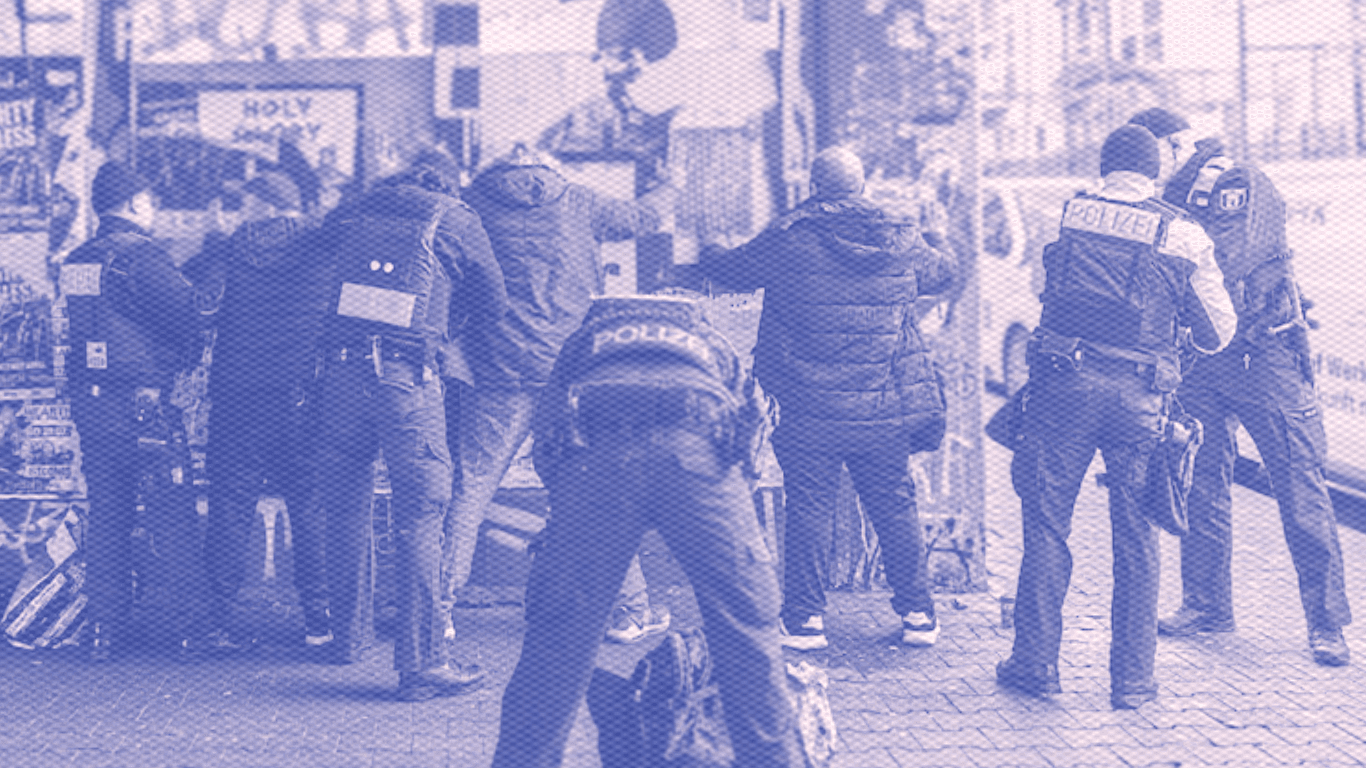
Court observations show: moral panic around “knife crime” fuels criminalization
Justice Collective
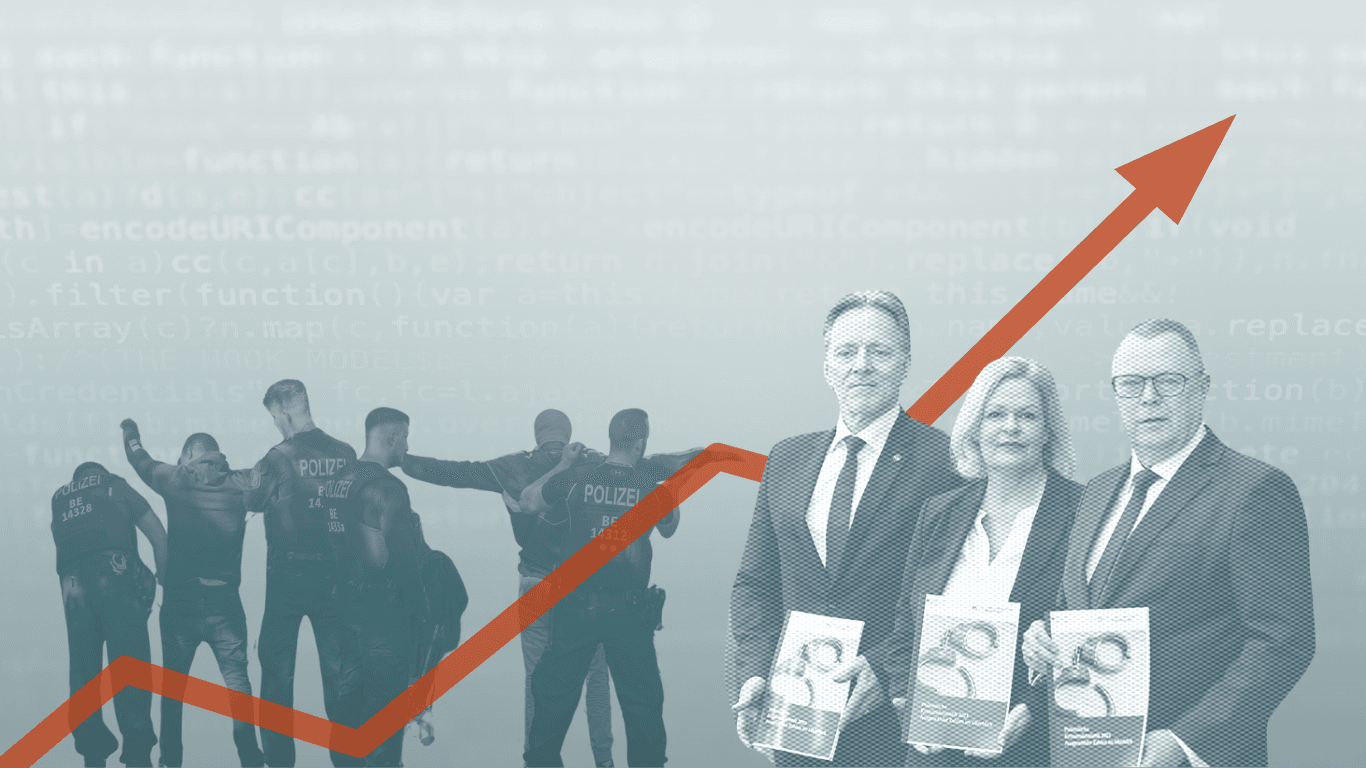
Die polizeiliche Kriminalstatistik ist als Instrument zur Bewertung der Sicherheitslage ungeeignet
Justice Collective, Grundrechtekomitee und 40 weitere
Wissenschaftler*innen und Mitglieder der Zivilgesellschaft warnen vor der politisierten Nutzung der polizeilichen Kriminalitätsstatistik, die jedes Jahr dafür genutzt wird, falsche Narrative über steigende Kriminalität und vermeintlich „kriminelle Migrant*innen“ zu verbreiten. Die Unterzeichnenden stellen das durch das BKA und die Medien gezeichnete statistische Bild entschieden in Frage und betonen, dass die PKS zur Polarisierung der Gesellschaft und Stigmatisierung bestimmter Bevölkerungsgruppen beiträgt.

Online-Pressekonferenz anlässlich der anstehenden Veröffentlichung der Polizeilichen Kriminalstatistik (PKS)
Justice Collective und Komitee für Grundrechte und Demokratie
Zusammen mit dem Kölner Komitee für Grundrechte und Demokratie hat das Berliner Justice Collective diese Konferenz einberufen, um die polizeiliche Statistik und deren politische Instrumentalisierung kritisch einzuordnen. Denn obwohl medial und politisch viel Wert auf sie gelegt wird, ist die PKS als Instrument zur Bewertung der Sicherheitslage in diesem Land ungeeignet. Dafür gibt es eine Reihe von Gründen, die wir in einem gemeinsamen Statement am 01.04. veröffentlichen werden und auf die wir in der Pressekonferenz im Detail eingehen wollen.

Criminalized: The Anti-Migration Debate Fuels and Legitimizes Systemic Racism
Anthony Obst, Justice Collective

How to Navigate the Criminal Legal System: A Guide for Impacted People



Racism on Trial is a campaign initiated by Justice Collective to reveal and resist racism in Germany’s criminal legal system.
Each year, criminal courts in Germany fine, jail, and sentence to probation hundreds of thousands of people. While powerful actors in our society frequently call on policing, criminalization, and punishment to address societal harms, these measures do not solve underlying problems. Because of systemic factors, people from racialized groups and migrants bear the brunt of these measures.
At the same time, politicians and media outlets spread false narratives about “migrant crime”, holding impacted communities responsible for their own criminalization. These narratives stigmatize racialized people and provide justification for punitive policies all the while obscuring the harmful impacts of the criminal legal system, including on migrants.
The Racism on Trial campaign aims to dislodge stigmatizing “migrant crime” narratives, creating the space to interrupt mass criminalization and the unjust realities of the punishment system.
Our work is based on courtwatching: We regularly watch cases tried in criminal courts, focusing on so-called “mass offenses”, since these make up a large part of the courts’ day-to-day activity. Courtwatching exposes the realities of the system while also offering solidarity to impacted people, who are often alone in court. So far, we have observed over 250 cases in Berlin’s criminal courts.
Join the campaign.
The Racism on Trial platform is a resource for people interested in organizing against criminalization and for those impacted by the system. It features a selection of reports from courtwatching that serves as documentation of injustice and as a window into the system, as well as analysis, commentary, resources, and much more.
Here is how to navigate our website:
To learn more about what we have observed and the systemic factors driving unjust punishment, browse our findings.
For reports on individual cases, visit our case archive.
To find resources for people impacted by criminalization and for activists to courtwatch, visit our resources page.
To find news updates as well as the perspectives of other activists and communities impacted by and resisting the injustices of the criminal legal system, visit our blog.
Courtwatching reveals the injustices of the punishment system. The Racism on Trial campaign is Justice Collective’s effort to end these injustices.
Our findings
Having watched over 250 court cases, we have gathered evidence that punishment systematically disadvantages people impacted by racism and poverty. Our initial observations reveal some key drivers of systemic injustice.
One of the key drivers of this is racist policing: More likely to be controlled by police, racialized people face an increased risk of being criminalized – especially for so-called “control offenses” such as theft, fare evasion, and drug offenses. This is exacerbated by the fact that racialized people also face greater risks of being affected by poverty. Asylum seekers, for instance, have to contend with restrictive, discriminatory welfare practices and policies such as the Bezahlkarte and many face structural hurdles in securing income, such as restrictions for getting work permits. While legal means of income are thus systematically limited for asylum seekers, survival tactics that proliferate in the face of this (e.g. the sale of drugs) are widely criminalized, fueled by racist policing.
The criminalization of poverty is another driver of systemic injustice. Courts frequently punish people for offenses linked directly to economic deprivation, such as fare evasion or theft of basic necessities like food and clothing. This further entrenches inequality by imposing debilitating fines and prison sentences on people affected by poverty. Instead of addressing systemic factors that drive poverty, courts hold individuals responsible for circumstances they have very little control over, exacerbating these circumstances through punishment.
Another driver of injustice we have identified is courts acting as powerful agents for enforcing borders. Criminal convictions can have grave consequences for people with precarious migration statuses and provide the grounds for their deportation. This entanglement of criminal law and migration law means that migrants face harsher sanctions, compounding the reality that they are also more likely to be criminalized because of intersecting inequities. In combination with the other factors outline above, this amounts to systemic racism.
Besides these key drivers of injustice in the punishment system, we regularly add new findings that we arrive at through court observations. We revealed how courts respond to and fuel a moral panic around “knife crime”, which is used to justify harsh migration policies across the board as well as security measures that disproportionately impact racialized communities. Read more about this phenomenon in our knife panic finding and revisit our platform regularly for updates.
Most recently we released analysis (with accompanying cases in the case archive) detailing how Germany’s criminal legal system follows the racist logics of the global War on Drugs, disproportionately punishing people from racialized and migrantized groups for drug-related offenses and prioritizing tough-on-drugs policies, even after the partial legalization of cannabis. Read more here.
Racist Policing
Racial profiling is only one part of a much bigger problem.
Criminalizing Poverty
Deprived of resources, people are funnelled into the punishment system.
Enforcing Borders
Criminal courts are powerful actors in the migration regime.
Knife Panic
In court, the reality of criminal cases involving knives provides a sharp contrast to sensationalized media portrayals.
The War on Drugs
Courts play a central role in sustaining the punitive and racist logic of the global War on Drugs.
Cases from our archive
Every day, people face the injustices of the punishment system. Yet, what happens in court is often kept out of view for those not directly impacted by the system. Click on the cases below for more about people’s courtroom experiences, or search the case archive.
Case 39
A young woman experiencing homelessness is sentenced to 90 days of fine payment for supplying drugs. The conviction will not appear on her Certificate of Good Conduct (Führungszeugnis), which was important to her, but the court punishes her with a high fine even as it acknowledges she was supplying drugs because of her poverty.
Case 38
This case concerned a person currently serving a prison sentence being found with a small quantity of cannabis, an amount that would usually not be prosecuted in Berlin. The person is brought to the court from the prison to stand trial and is sentenced to a €30 fine.
Case 37
A white defendant with access to private counsel is sentenced to a fine for possession of 15 small bags of cannabis, with a total amount of cannabis above the legal threshold for a “low quantity” (nicht geringe Menge). The court accepts her account that the cannabis was for personal use, and justifies the relatively mild sentence with a favorable assessment of the defendant living a “normal bourgeois life”.
Case 36
In a case heard shortly before the 2024 law change that legalized certain forms of cultivation, possession, and acquisition of cannabis in Germany, a young man is accused of selling cannabis via car delivery. Despite the relatively low quantity of cannabis found and the person having childcare responsibilities and financial difficulties, the prosecution recommends a sentence of over a year in prison. In the end, the judge imposes a long probation sentence, severe in light of the impending opening of the cannabis market.
Blog
On our blog, we feature news posts related to current events as well as sharing the perspectives of impacted people and communities, activists, advocates, and others who have much to share about how they are building power to end racist criminalization and punishment. Read some of our blog posts below.
Structures of Anti-Roma Racism: An interview with Amaro Foro’s Valerie Laukat
Justice Collective
Undoing the War on Drugs: An interview with Philine Edbauer from My Brain My Choice
Justice Collective
Criminalized: The Anti-Migration Debate Fuels and Legitimizes Systemic Racism
Anthony Obst, Justice Collective
Organizing Resources
Check out our background guides on the criminal legal system, useful links and sample letters for impacted people as well as further inspiration for organizing.
Shifting Funds from the Police to the People
Justice Collective reveals Berlin's outsized spending on police: Berlin now has more police per capital than New York City. Based on our budgetary analysis, we argue that we should reinvest police budgets into communities.
What does the criminal legal system look like?
Infographics on the scope of the criminal legal system.

Demands for non-reformist reforms to the criminal legal system 2025
Non-reformist reforms to address the harms of the punishment system. Join us in fighting for real change now!

Why we watch court
An overview of courtwatching as a tool of abolitionist and anti-racist organizing, with details on why we watch court to challenge the punishment and criminalization of low-level criminal cases.
Join us!
Reach out to us if you’re interested in courtwaching, organizing for change, or if you are looking for information or solidarity courtwatching in your own case. No one should be left alone in court.